
10 Questions Homeowners Forget to Ask Pool Builders Before Hiring Them
Planning a new swimming pool is exciting, but choosing the right builder involves more than comparing prices and looking through photographs.
A pool project can include design, excavation, engineering, council approvals, plumbing, electrical work, fencing and landscaping. It may also need to respond to difficult access, changing ground conditions or an existing home and outdoor area. The builder you choose will influence not only how your pool looks, but how smoothly the entire project comes together.
Most homeowners have never built a pool before, so it can be difficult to know what to ask during an initial consultation. These ten questions will help you understand a builder’s experience, process and level of support before you commit.
1. Have You Built Pools Like Mine Before?
Every property presents a different combination of opportunities and challenges. A straightforward pool on a flat, easily accessible section is very different from one built into a hillside, alongside an existing home or within a tightly constrained site.
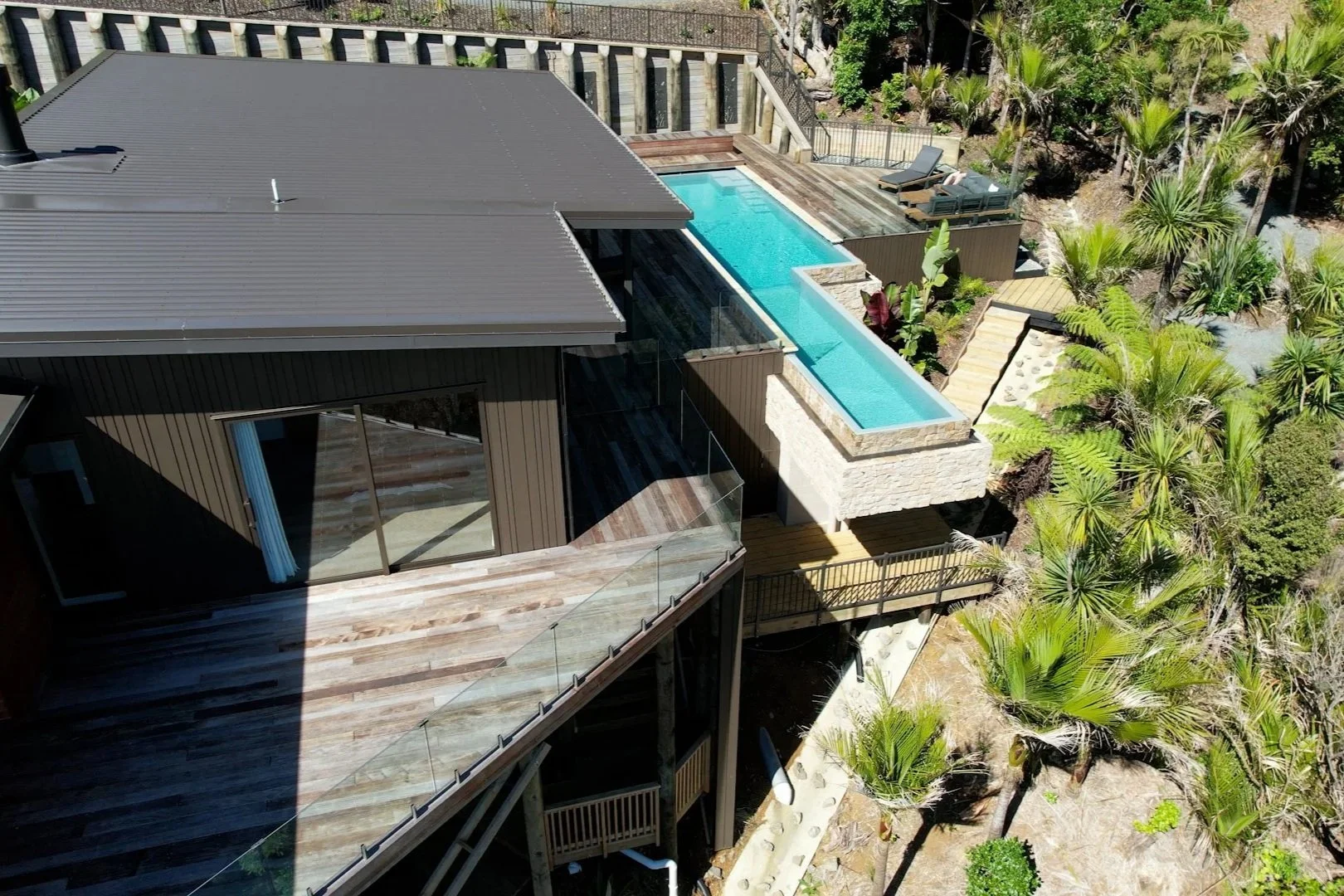
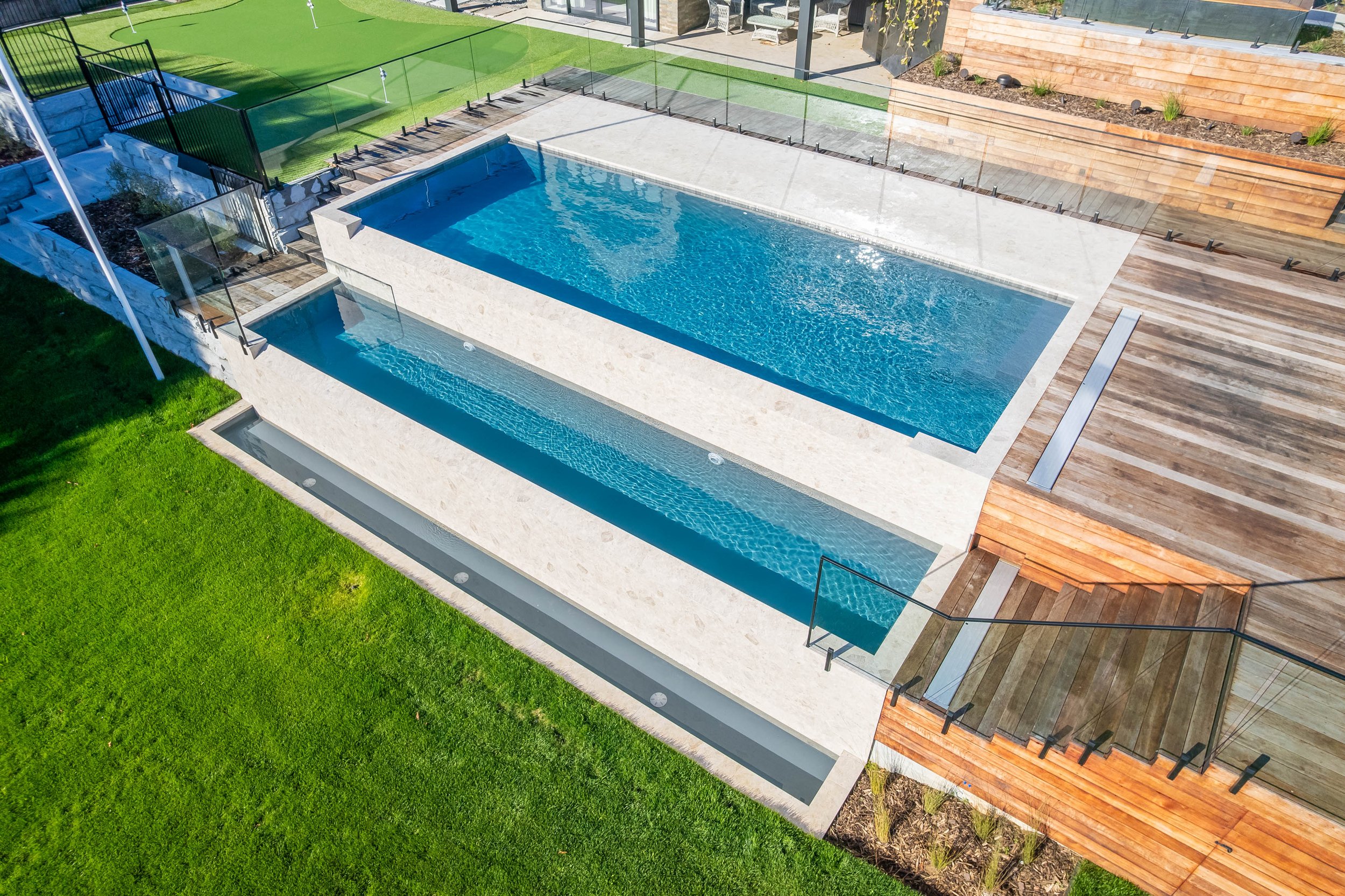
Ask the builder to show you completed projects that are genuinely comparable to yours. Consider the shape, size and features of the pool, but also look at the surrounding conditions. Have they worked with sloping land, narrow access, retaining walls, integrated spas, infinity edges or complex landscaping?
Relevant experience does not mean your pool needs to resemble something they have built before. It means the builder understands the technical demands of your project and can design a solution around them.
A good answer: The builder can discuss several relevant projects, explain the challenges involved and show how those challenges were resolved.

2. What Is Included in the Quote — and What Is Not?
Pool quotes are not always prepared on a like-for-like basis. One may cover most of the work required to complete the pool, while another may leave significant elements to be arranged and paid for separately.
Ask for a detailed written proposal that clearly defines the scope. Depending on the project, additional costs could include engineering, council fees, excavation, removal of surplus soil, electrical connections, fencing, paving, retaining work, landscaping or reinstatement of the site.
It is also helpful to clarify whether the quote includes the pool equipment, lighting, heating, water treatment system, cover and initial commissioning.
The lowest initial figure may not represent the most affordable finished project. What matters is understanding what you will receive and what other costs need to be allowed for.
A good answer: A clearly itemised proposal that identifies inclusions, exclusions, allowances and any parts of the project that cannot yet be accurately priced.
3. Who Will Manage My Project Day to Day?
The person who meets you during the initial consultation may not necessarily be the person supervising your project once construction begins.
Ask who will be responsible for coordinating the build, who will be present on site and who you should contact when you have a question. It is also worth understanding how information from the design and quoting stages is passed through to the construction team.
Pool projects involve a sequence of interconnected stages. Good oversight helps ensure decisions are communicated clearly and each trade arrives when the site is ready for them.
A good answer: You are given a named point of contact, a clear explanation of their role and an understanding of who has overall responsibility for the finished project.
4. Who Handles the Consent and Approval Process?
The approvals required for a pool can vary according to the property, local council and scope of the wider project. Building consent, engineering documentation, site plans and pool-barrier requirements may all need to be addressed before construction begins.
Ask whether the builder prepares and lodges the necessary documentation, coordinates with engineers and responds to council requests for further information. You should also understand which applications or professional fees sit outside their scope.
Experience working within your region are invaluable, as council requirements and site conditions are not identical throughout New Zealand.
A good answer: A comprehensive explanation of the approvals your project is likely to require, who will manage each step and what information is needed from you.
5. How Will You Communicate With Me During the Project?
Even a well-planned pool build involves decisions along the way. You may need to confirm finishes, approve variations or coordinate the pool work with landscaping and other construction taking place on the property.
Ask how often you can expect updates and whether communication will usually take place by phone, email, meetings or site visits. Find out how important decisions and changes will be recorded, particularly when they affect cost or timing.
You should feel informed without needing to chase the builder for every update.
A good answer: A consistent communication process, a responsive point of contact and written confirmation of significant decisions, costs, and changes.
6. How Do You Select and Manage Subcontractors?
A pool build may involve excavation contractors, engineers, electricians, plumbers, concrete specialists, fencing installers and landscapers. The quality of the final result depends on how well these different parts are coordinated.
Ask whether the builder works with an established group of trusted trades and who is responsible for scheduling and supervising them. Where you are using your own landscaper, architect or builder, clarify how the different teams will communicate and where responsibility for each area begins and ends.
Strong working relationships between trades can make a noticeable difference to both the process and the finished pool.
A good answer: The builder can explain who will be involved and why, how their work is checked, and how the wider project team will be coordinated.
7. How Are Unexpected Costs or Changes Handled?
Even with careful planning, circumstances can change. Excavation may reveal unexpected ground conditions, the client may request an additional feature or work elsewhere on the property may affect access and scheduling.
Ask how variations are identified, priced and approved. Additional work should not simply appear on the final invoice without prior discussion.
A good builder will also raise potential risks early. They may not be able to guarantee that every unknown has been eliminated, but they should be open about what could affect the budget and how those situations would be managed.
A good answer: A documented variation process in which the reason, price and effect on the programme are explained before additional work proceeds.

8. How Long Will the Entire Process Take?
The physical construction of a pool is only one part of the overall timeline. Design development, engineering, product selections, consent processing and coordination with other contractors all take time.
Ask for the project to be broken into stages, rather than relying on a single estimated completion date. Find out when the builder expects to begin, how long construction is likely to take and what needs to happen before work can start.
Weather, council processing, difficult excavation and changes to the design can all affect timing. An experienced builder should be willing to discuss these possibilities rather than offering an unrealistically optimistic programme.
A good answer: A practical timeline that separates design, approvals and construction, with an honest explanation of the factors that could create delays.
9. What Warranties and After-Sales Support Are Provided?
Your relationship with a pool company should not end as soon as the water goes in.
Ask what warranties apply to the pool structure, interior finish, workmanship and equipment. Because different components may be supplied by different manufacturers, the length and terms of each warranty can vary.
It is equally important to understand what support will be available once the pool is operating. Will the builder explain the equipment and water-care system? Can they assist with servicing, maintenance or future repairs? Is the person providing that support based in your region?
A good answer: Written warranty information, a proper handover and a clear local contact for ongoing advice and support.
10. Can I View Completed Projects or Speak With Past Clients?
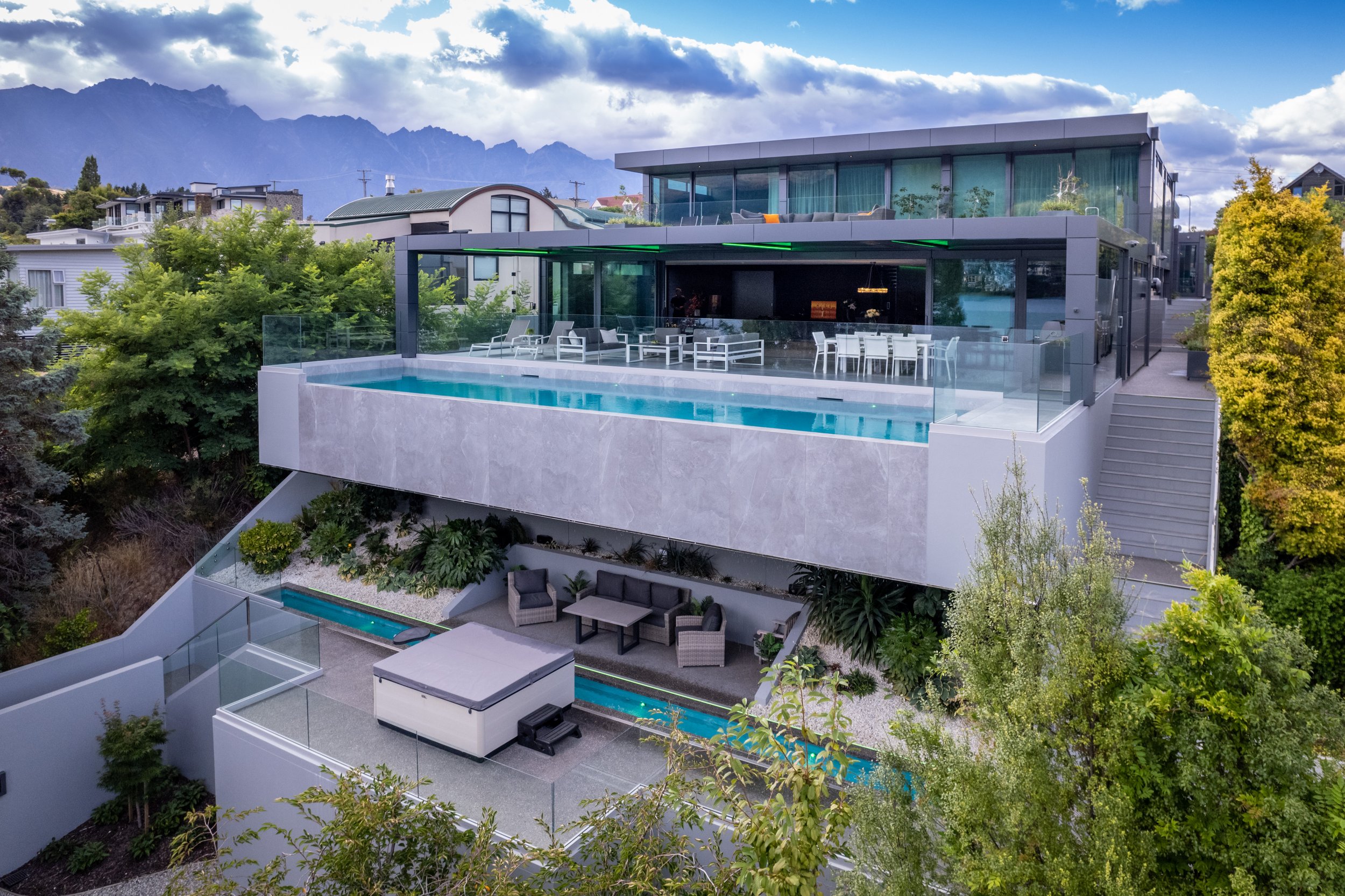
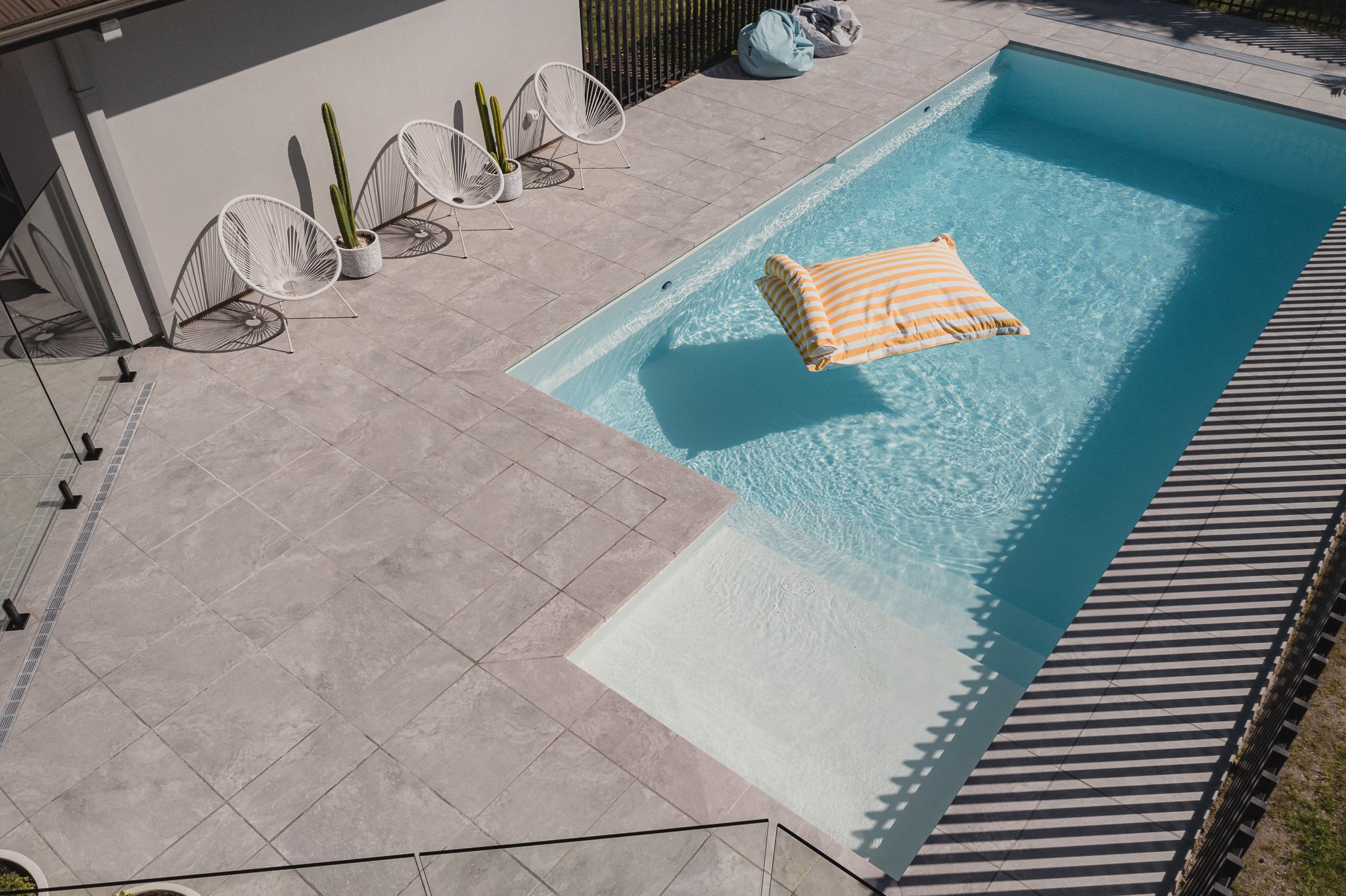
Professional photography can show you the design and finish of a completed pool. Speaking with past clients can tell you much more about the experience behind it.
Ask whether the builder can provide references from homeowners with comparable projects. Useful questions include whether communication was clear, how unexpected issues were handled, whether the site was well managed and whether the client felt supported after completion.
Online testimonials and awards can be useful indicators, but direct feedback provides another level of reassurance.
A good answer: Relevant completed projects, genuine client feedback and a willingness to discuss both the results and how those projects were delivered.
One More Thing to Consider
The answers to these questions matter, but so does the conversation itself.
Does the builder take the time to understand how you intend to use the pool? Do they ask about your home, family, landscape, budget and long-term priorities? Are they willing to explain the reasoning behind their recommendations, or do they immediately direct you towards a standard solution?
A well-designed pool should respond to its setting and the people who will use it. The right builder will be interested in more than fitting a pool into the available space. They will consider how it connects with the home, how it will be maintained and how it can continue to work for you in the years ahead.
Taking the time to ask the right questions at the beginning can help you compare pool builders more meaningfully — and begin your project with clearer expectations and greater confidence.
Ready to dive in? Check out some of our most recent projects, or start designing your dream pool with our pool planning guide.